Before studying abroad, I thought I knew exactly what I liked.
I had my routines , my habits , my pace . Back home, my version of “slowing down” was drinking my coffee on the way to the gym, blasting music in my car, mentally preparing for the day. That was me enjoying the moment .
When I came to Europe, I came with the intention of slowing down and finally being in a place where it is normalized. As the Italians say, “slowly, slowly.”
What I didn’t realize was that slowing down is practically forced on you here, even when you don’t want it to be.
If I had to describe this semester , I wouldn’t do it through a list of cities or a timeline of weekends. I would describe it like a menu , with each place and each experience adding a different flavor. Some I loved immediately, some grew on me, and some just weren’t for me at all.
The Menu
Antipasto - My Version of Slowing Down
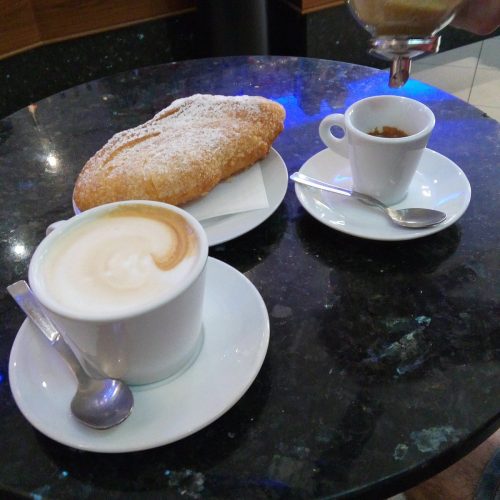
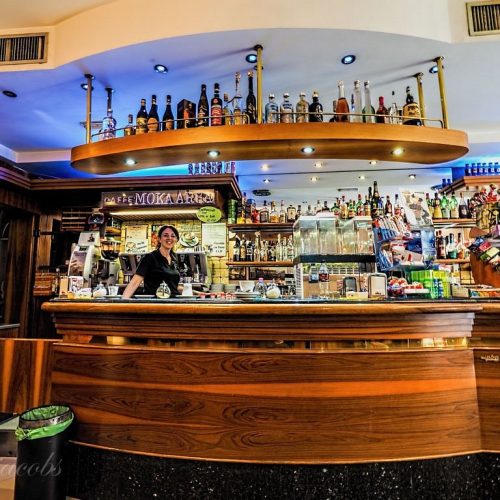
In Florence, coffee is not something you take with you. It is something you arrive for.
The first few times I ordered an espresso, I didn’t really get it. You stand at the counter, drink it in a few sips, and then linger for a moment. Not long, but long enough that it feels intentional. No phone, no rushing out, no multitasking. I honestly think this is something a lot of screen-addicted people would struggle with.
Back home, I would already be halfway to the gym, music blasting, coffee in hand, thinking about the next three things I needed to do. That felt like my version of being present.
Here, presence looks different. It is quieter , less productive, and slightly uncomfortable at first.
It is not about drinking coffee slowly. It is about not doing anything else while you drink it.
Side note: most ISI study abroad students either get their coffees from Rivarno, Ditta Artigianale, or Melaluca. However, I recommend paying a visit to Paolo and Francesca. Their coffee is significantly cheaper, higher quality, and the same proximity to ISI’s Bargagli location as Ditta Artigianale.
Primo - What Felt Familiar and What Didn't
People always talk about how long Italian dinners are, but that part didn’t shock me.
I come from an Italian family, so long dinners are nothing new. We sit, we eat, we talk. The difference is that at home, I eventually run out of things to say. You are with the same people, having the same kinds of conversations, and at some point, it slows down.
In Florence, that never seemed to happen.
I would sit in restaurants listening to conversations around me, locals talking endlessly , animated and engaged, like there was always more to say. I kept wondering what they were even talking about for that long.
It made me realize that it wasn’t just about time. It was about how people approach it. Meals are not something to get through, even socially. They are something people invest in.
At the same time, other things felt completely unfamiliar.
The peace of everyday life, walking, waiting, ordering, felt slower than I was used to. Not inefficient, just unhurried. And while part of me appreciated it, part of me was still internally thinking that we could all move a little faster.
Both things were true at the same time.
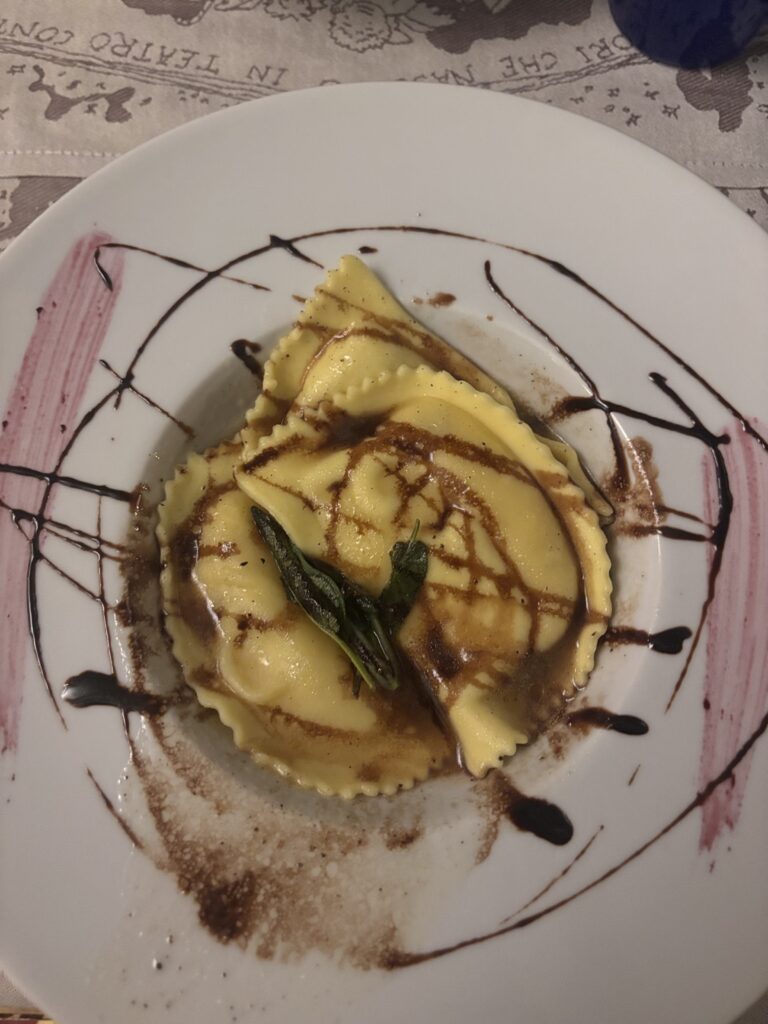
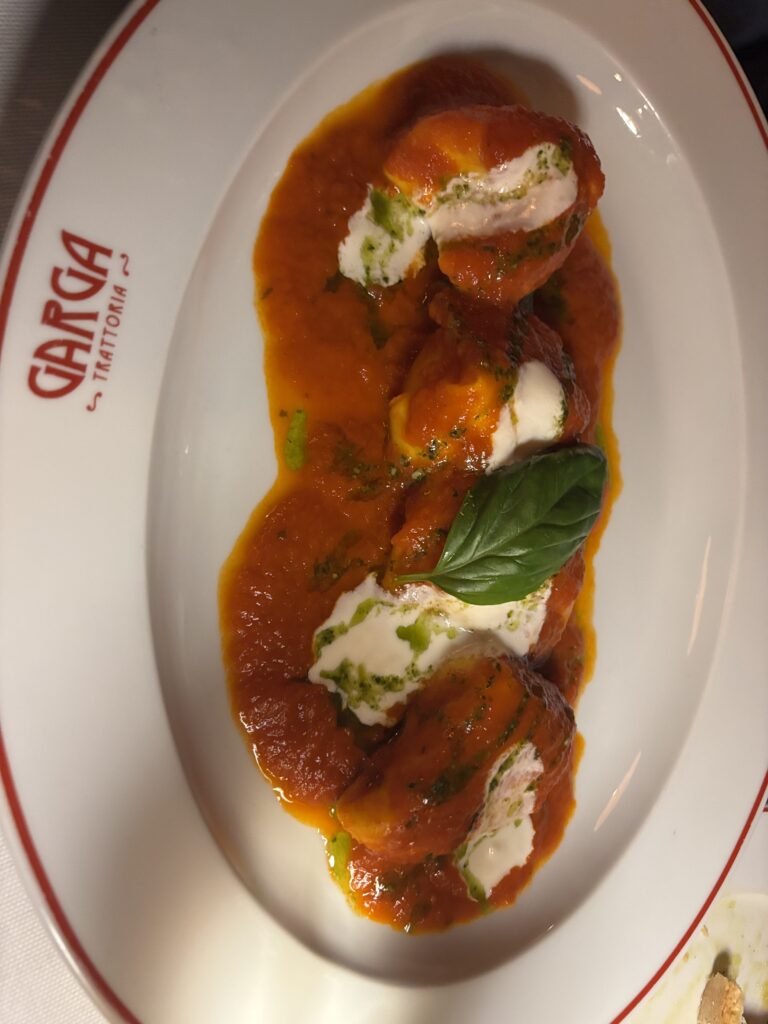
Below are two of my favorite “Primo” dishes I have had during my study abroad experience in Florence.
Pear ravioli from Acqua al 2
Burrata Tortelloni from Trattoria Garga
Secondo: Expanding My Taste
Once I left Florence, I started noticing how different each place felt, not just visually, but in energy, rhythm, and what people seemed to value.
Barcelona was one of my favorites. It felt alive, social, spontaneous, and slightly chaotic in a way that worked. Meals felt like extensions of the night rather than structured events. It reminded me that experiences do not have to be perfectly planned to be memorable.
Malta was completely different, but in a way I also loved. It felt balanced, relaxed without being boring, social without being overwhelming. It was the kind of place where nothing felt forced, and that made everything feel easy.
Tenerife felt like an escape from everything structured. Surrounded by nature, there was no pressure to constantly be doing something. It was one of the first times I felt completely disconnected from routine.
Lake Como was quieter, almost too beautiful to interact with normally. It made everything feel slower without trying.
The Dolomites in Cortina completely shifted my perspective. Being surrounded by mountains that large makes your usual sense of urgency feel irrelevant. At one point, our tour guide told us to be back at the van at a certain time. Normally, I would show up five minutes early. Instead, I lost track of time and arrived a minute late because I was so absorbed in the scenery. The best part was that nothing happened. The world did not end, and I did not get left in the middle of the mountains like I would have assumed.
Each place added something different, not just to my experience, but to what I realized I value.
Contorno: Knowing What You Don't Like
Budapest was my first trip.
And I didn’t like it.
Not in a dramatic way. It just didn’t feel like me. The energy felt heavier, the weather was muggy, and something about it felt off. I kept waiting to feel the same excitement I had seen in other people, and it just never happened.
At first, I thought I was doing something wrong, like I wasn’t experiencing it the right way.
But as I traveled more, I realized that not every place is going to match your preferences, and that is not a failure. It is clarity.
I learned pretty quickly that I am drawn to places that feel lighter, more open, and more vibrant. And while that might sound obvious, I do not think I actually knew that before.
Sometimes developing a taste is not about what you love. It is about what you don’t.
Dolce: What Actually Changed
I am not coming back as a completely different person.
I still walk fast. I still get impatient when I am stuck behind people moving slowly. I still default to doing things efficiently when I can.
But I notice more now.
I notice when I am rushing for no reason. I notice when I am treating experiences like tasks. I notice when I am not fully in something, even if it is just a meal.
And beyond that, I notice what I actually enjoy. Not just places, but environments, energy, peace, people, music, architecture, food, and culture.
That awareness is probably the biggest change.
Digestivo: What I Would Tell Someone Else
If you study abroad, don’t just focus on where you go. Pay attention to how each place feels to you.
You do not have to love everything , and you do not have to experience things the same way everyone else does.
Some places will feel right immediately . Some will take time . Some will not click at all.
But every one of them will tell you something about what you like, how you move through the world, and what kind of experiences actually matter to you.
For me, this semester was not just about seeing new places.
It was about developing a taste for peace, for people, and for experiences, and figuring out which ones I will keep choosing long after this is over.
Written By: Amira Massoud