
Part 1: Culture shock
Our first time walking into the local carrefour market was a stressful, but fascinating experience. We took at least 5 minutes staring at the milk, confused why it didn’t come in half and full gallons, and even more time wondering why the eggs weren’t in the fridge! Despite our confusion and disorientation, we found many hidden gems and aspects of the supermarket experience that we will definitely miss when we return stateside in a few weeks.
Most of the express markets throughout the city center that we traveled to are structured like a maze; meant to guide you from produce at the start, to drinks at the very end – a completely different experience from the rows of aisles that we were used to. The most enlightening experience for us? – The Coop Firenze, a supermarket the size of Walmart packed with every type of food we could think of, with fresh meats, cheeses and produce grabbing my attention right as we walked in. Despite the enormity of the Coop, the biggest difference between Italian and American grocery stores is the sizes of the products (including the ingredient lists). Nowhere in Italy will you find CostCo 10 lb (4.5 kg) packages of ground beef or sliced bread with an ingredient list longer than your receipt, as a result of better food regulations throughout Europe that promotes healthier lifestyles.
Compared to supermarkets such as Stop&Shop, Whole Foods and ShopRite in the United States, markets in Florence have excellent quality to price ratio, even in spots close to the city center! From € 0,90 boxes of pasta to €4 chianti and €3 cheese, I would often find myself thinking after a €18 shopping trip that I would have paid at least $30 dollars at home, something that makes all the difference as a study-abroad student trying to save every penny
Part 2: Historic markets vs modern supermarket
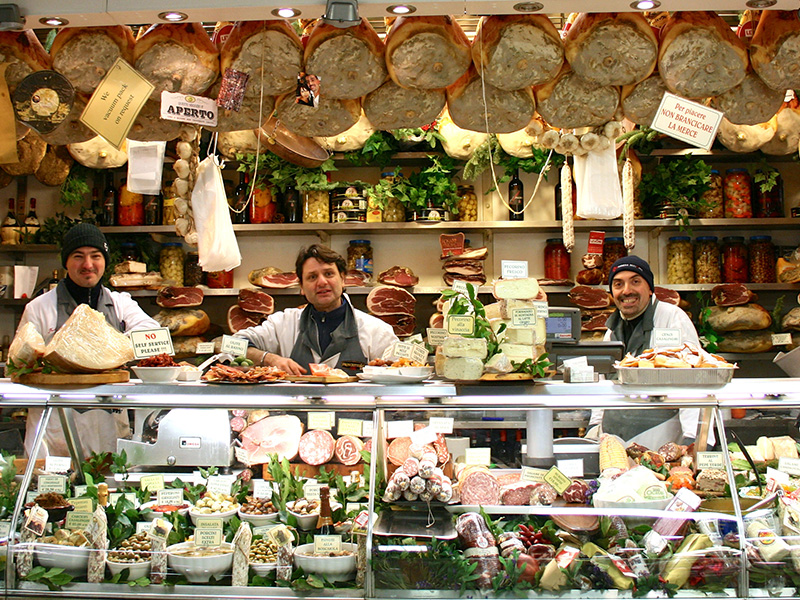
There are two different approaches to grocery shopping in Italy. There are the modern supermarket chains like Conads and then there are the big open air historic markets like Mercato Centrale. These are two completely different experiences and at first can be difficult to navigate.
The supermarkets are more focused on efficient and quick shopping. This is where you will go to get dry staples and household goods. It is very convenient and easier to navigate. All of the foods have nutrition labels where you can figure out the ingredients and macros all on your own. You scan your items and grab a few bags then you are on your way with barely interacting with anyone and just looking to get in and out quickly.
The historic markets are a whole different experience. Not only are you getting very fresh foods but you are getting an experience of community and the social aspect. The fresh seasonal ingredients you can get at these markets are impossible to beat. The self service idea is out the window. In order to get what you want it comes along with a unique interaction with every vendor you are looking to buy from. This is a great experience that builds community and a chance to interact with the locals which is something that everyone needs to do.
Part 3: Reflections and advice for future study abroad students
Cooking out of our small Italian apartment kitchen has been a learning process that has changed how I look at cooking. With such small storage areas and the food being much more fresh so it goes bad quicker, means that you can not go to the store with the intention of buying food for the next two weeks and storing it all in the kitchen like I usually do in the states. You have to go every two or three days which causes you to eat fresh and buy things with intention.
Here are some quick tips for future study abroad students when approaching cooking and the Italian supermarkets:
- Keep an eye on the labels: It is important to make sure you know what you are buying as things can look similar but be completely different so it is a good idea to look up key words so you know what you are looking for.
- Shop light: Don’t go to the store with the intention of buying food for multiple weeks. Go and think about the next few days ahead. You will be making multiple quick trips to the market every week.
- Embrace the people working: Do not be afraid to talk to the people working at the store. They are around this food all the time and know what is best! Ask them any types of questions you have and they will help you out.
Tiktok: Cook with us in our study abroad apartment
Instagram: Coffee Carousel
Written by Quinn Gregoire, Theo Keppler, Lila Foley, Renee Barr, and Taylor Pike