
One of the easiest ways to understand a place is through its food, and in Florence, that really comes through in its markets. They are not just places to grab something to eat, but spaces where daily life happens. From busy indoor food halls to quieter outdoor stalls, the markets show both the fast and slow sides of the city and how important food is to the culture here.
Mercato Centrale Market
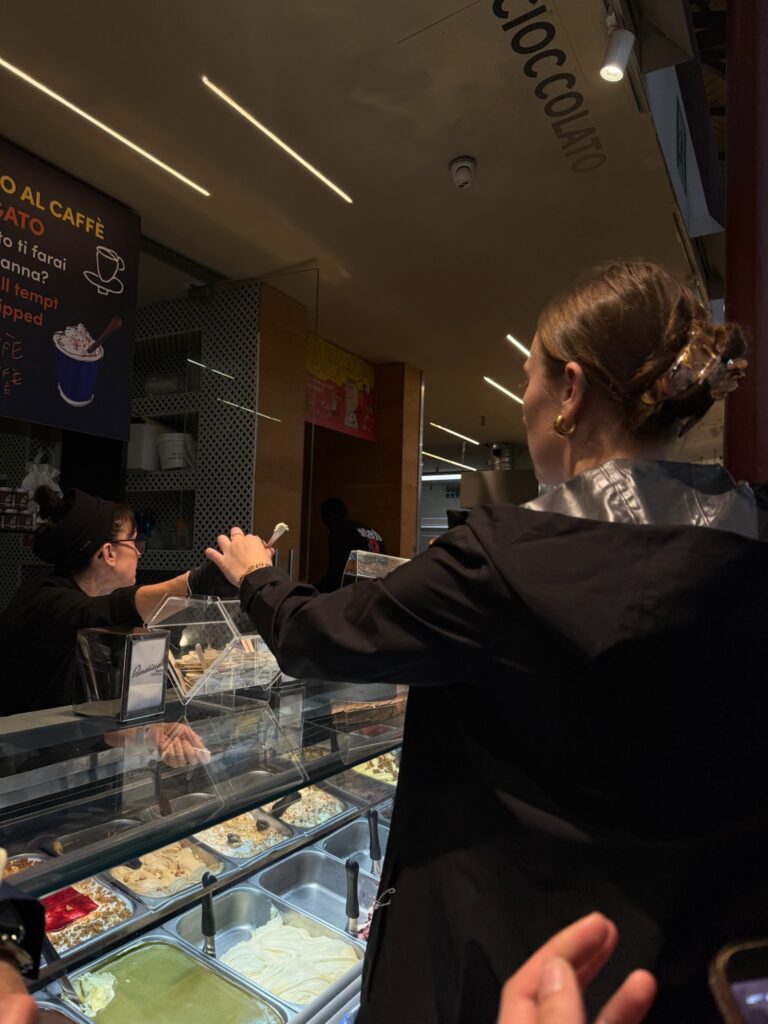
The first thing I noticed walking into Mercato Centrale was not even the food, it was how loud and busy it was. As soon as I walked in, there were people everywhere, talking, ordering, and moving around. It felt like a lot all at once, but in a way that made it exciting. I paused for a moment when I walked in just to take everything in because there was so much going on.
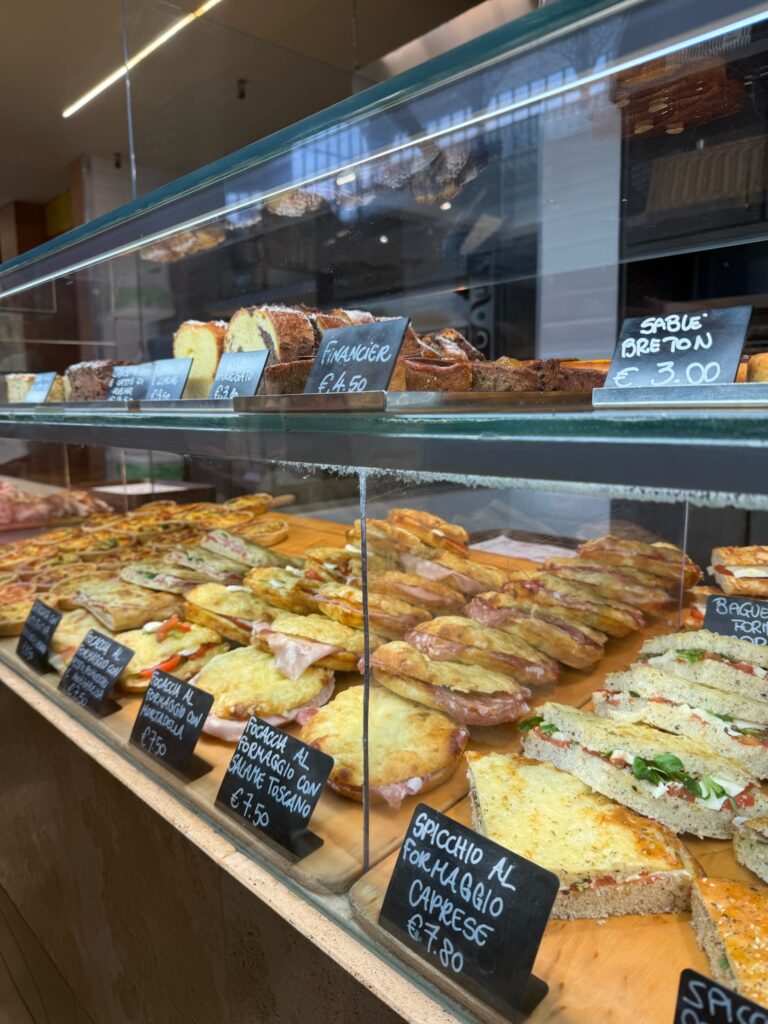
As I started walking through, I realized how many different food options there were. There was fresh pasta, sandwiches, pizza, desserts, and pretty much anything you could think of. Upstairs was even more crowded, with tons of stands and people trying different things. It was a little overwhelming, but not in a bad way. I moved slowly as I looked around because I wanted to make sure I didn’t miss anything as I walked.
Even though Mercato Centrale is popular with tourists, it still felt like a real part of Florence. It didn’t feel staged or fake. People were sitting together, eating, talking, and just spending time there. It felt social, like it was just as much about being there as it was about the food.

Sant’Ambrogio Market
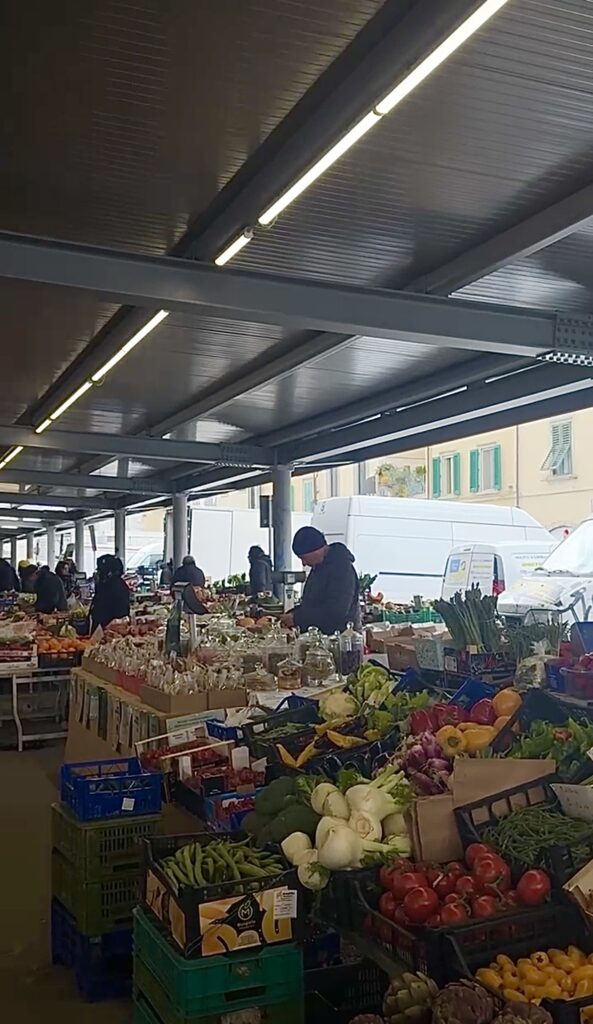
About a week later, I went to Mercato di Sant’Ambrogio, and it felt completely different right away. Instead of a big indoor space, it was outside with smaller stands, and it felt much more local. There were not as many tourists, and it seemed like most of the people there were just doing their everyday shopping.
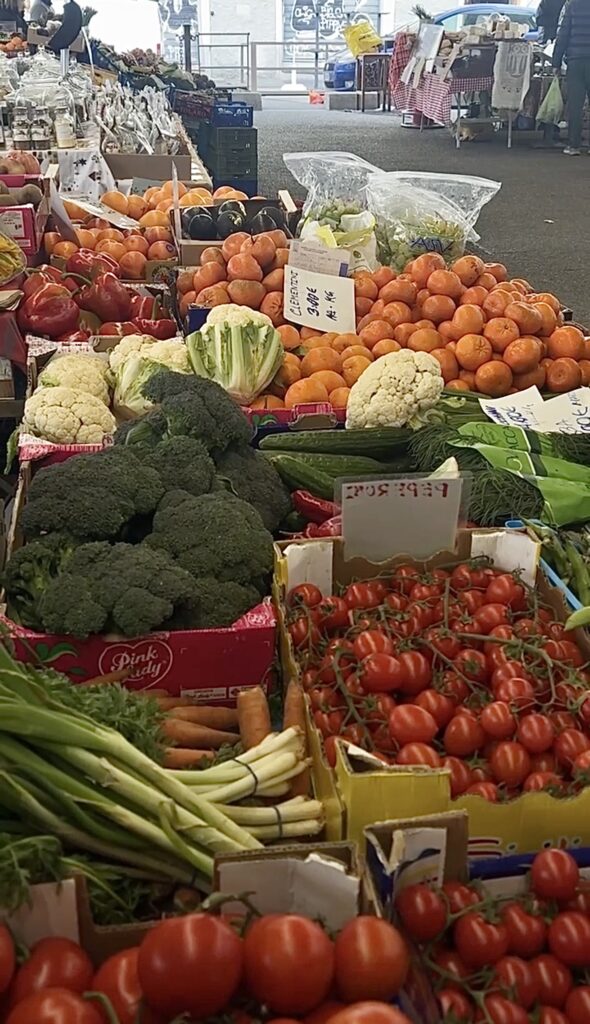
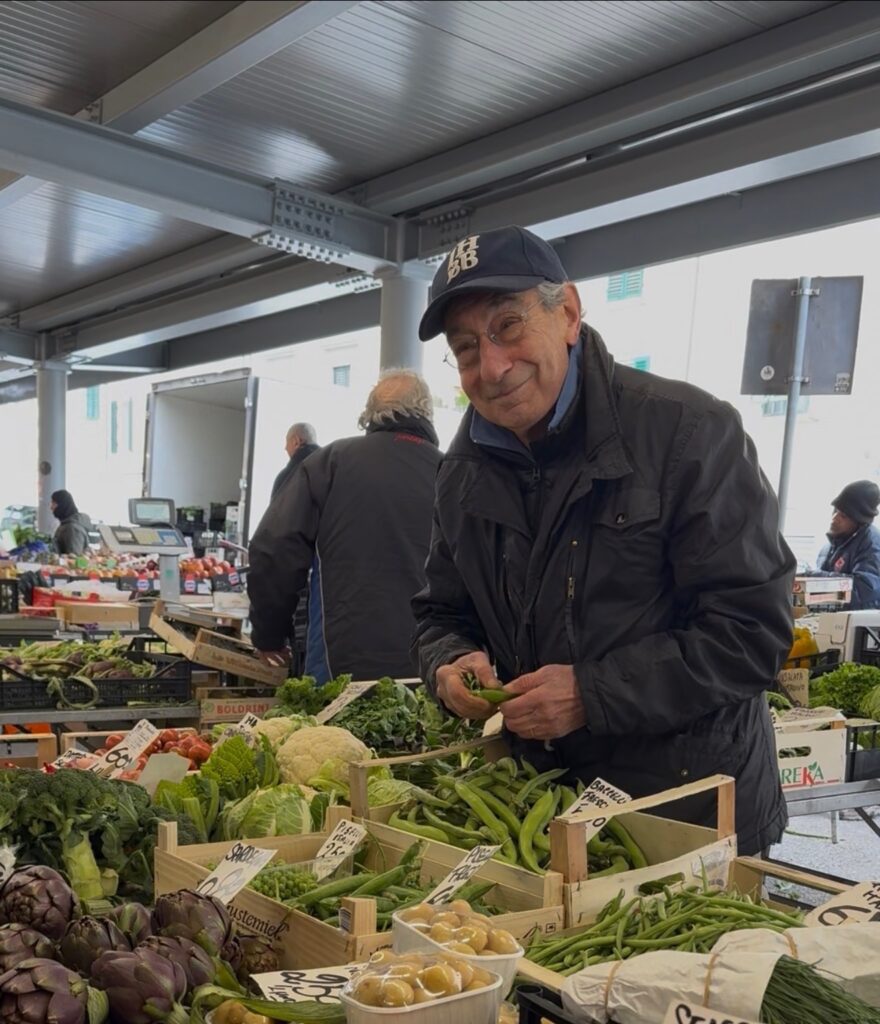
What stood out the most to me at Sant’Ambrogio was how personal everything felt. The vendors were talking directly to customers, and it seemed like they knew a lot of the people who came through. Customers were taking their time, looking at everything, and you could tell they were being very thoughtful about what they were buying. There were stands with fresh fruits, vegetables, meats, and cheeses, and everything looked very fresh. It felt simple, but in a good way.
The Market Experience
Seeing both markets made it easier to notice how different they were. Mercato Centrale felt fast paced, busy, and full of options all in one place. Sant’Ambrogio felt slower, more traditional, and more focused on everyday life. They both showed different sides of Florence, which made the experience more interesting overall.
It also made me realize how different food culture is here compared to the U.S. At home, grocery shopping usually feels rushed. You go to one place, get everything you need, and leave. In Florence, it feels more intentional. People shop more often, buy fresh food, and interact with the people selling it. It feels less like a chore and more like part of daily life.
Overall, going to these markets was one of the best ways I have experienced Florence so far. It felt more real than just going to restaurants or tourist spots because it showed what everyday life actually looks like. If someone wanted to understand the culture here, I would definitely recommend going to the markets. It is where you can really see how people live, not just where they eat.
By: Mae McGowan, Lily Pergola, Arielle Maliniak, Sylvia Prebor